Rotten Tomatoes
Submit search Movies Tv shows RT App News Showtimes

The Key

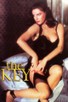
Play trailer Poster for The Key R 1985 1h 50m Drama Play Trailer Watchlist
Watchlist Tomatometer Popcornmeter
Tomatometer 3 Reviews 40% Popcornmeter 100+ Ratings
An art historian (Frank Finlay) and his younger wife (Stefania Sandrelli) read each other's erotic diaries in 1940 Venice.

Critics Reviews

View More
Eddie Harrison film-authority.com Jan 23, 2024
3/5
...probably doesn’t offer enough flesh to satisfy the likely audience, but it’s remarkably cerebral for a story intended to get the pulses racing... Go to Full Review
Diego Galán El Pais (Spain) Feb 20, 2020
A boring and terribly shot erotic movie. [Full Review in Spanish] Go to Full Review
Emanuel Levy EmanuelLevy.Com Sep 25, 2005
3/5
Read all reviews

Audience Reviews

View More
william d @acsdoug Feb 5, 2022 I'm a fan of Tinto Brass' movies, but I thought this one was kind of boring. Stefania Sandrelli is nice to look at though. See more Jan 23, 2012 Awful and unwatchable. See more Sep 9, 2010 This was a pretty good erotic drama from Tinto Brass. I liked Caligula and Salon Kitty better, but this has some good points. Like the beautiful Stefania Sandrelli. Some of Frank Finlay's jealous outbursts are kind of funny and over the top. See more May 30, 2010 Not the best from Tinto Brass, but still semi-enjoyable due to ample doses of the Brass special nudity. A woman starts to cheat on her husband because he can't fulfill her so she starts to make it with everyone. The World War II setting is a nice touch to a pretty mundane sex flick. See more Mar 25, 2009 Very good photography in grey scale. I loved the way she was dressed more than she was undressed. Intriguing. The metaphore on resistance against fascism was very interesting. See more Oct 18, 2008 In Salon Kitty, director Tinto Brass showed an Authoritarian-fascist government exploiting the sexual secrets of its people in order for reasons of control and manipulation; in The Key, set in Venice just before the outbreak of the second world war, Brass shows sexual transgression as a means of escaping the suffocating quotidian world of fascist sexual-social morality, although that escape comes at the price of self-sacrifice and death. An ageing professor of art is bothered by his younger wife Teresa's modesty and priggishness. He lays a plan to manipulate her into expressing her sexual side, through the use of diaries purposefully left to be discovered, erotic photography, alcohol and finally a stage-managed affair between Teresa and his daughter's fiancé. Yet setting the workings of desire in motion this way leads to things slipping from the professor's control: his wife becomes increasingly an agent in her own sexual liberation, his fascist daughter schemes for her own ends and finally the professor's own body escapes the control of his mind, leading to spasm, thrombosis and death. Yet the death doesn't seem tragic, as it frees both the professor from the evils of history which are about to be spectacularly unleashed (and this is a man who has been helping the Jews of Venice) and his wife from her socially imposed role of modest matron and submissive object. Brass' film shows sexual desire as a looking-glass world (mirrors abound) in which values are undermined, roles are reversed and social propriety is challenged. As Teresa becomes increasingly liberated, she puts men in the role of providers of pleasure, gains her own enjoyment out of seeing them naked and even gets them parading about in her clothes: the professor's collapse comes after he has been ordered by Teresa to wear her knickers, stockings and bra and make love to her in them for because that's how she likes to see him. The film's narrative movement mirrors the story's progression: at first, the professor is the protagonist and Teresa is subject to the male gaze; gradually she takes over as the focus of the film, and men come increasingly under the naked scrutiny of the camera. Intriguingly, the taking of photographs is one of the methods by which the professor manipulates the other characters, and one feels that Brass is hoping that his photography will manipulate his audience, male and female, in similar ways. Also worth noting is the way in which Teresa's costumes chart her changes, so that by the denouement she is wearing pure white for her husband's funeral. Yet the end of the film makes complex the focus on sexual liberation for the individual, as the remaining characters are drowned out by history, in the shape of fascist announcement, songs and celebrations. Frank Finlay is aptly cast as the professor, returning to Venice for the third time in his career, having hatched Iago's plan to sexually manipulate Othello in the Olivier film there, and then having been imprisoned in Venice by the Inquisition for his sexual transgressions as the title character in Dennis Potter's mini-series Casanova. Stephania Sandrelli gives a spirited and extraordinarily brave performance as Teresa, throwing off her art-house airs to luxuriate in the most lurid scenes of soft-core erotica, and having the voluptuousness and acting skill to trace her characters emotional and physical journey in the most eye-poppingly sexy and seductive way. Beautifully filmed, designed and lit, and as near as Brass ever came to making a cinematic masterpiece. See more Read all reviews
The Key

My Rating

Read More Read Less WRITE A REVIEW EDIT REVIEW POST RATING

Movie Info

Synopsis An art historian (Frank Finlay) and his younger wife (Stefania Sandrelli) read each other's erotic diaries in 1940 Venice.
Director
Tinto Brass
Producer
Giovanni Bertolucci
Screenwriter
Tinto Brass
Production Co
Selenia Cinematografica, International Video Service, San Francisco Film
Rating
R
Genre
Drama
Original Language
Italian
Release Date (Streaming)
Jul 18, 2019
Runtime
1h 50m
Join The Newsletter Join The Newsletter Cookie Settings